Table of Contents
A Beginner’s Guide to Dutch Food| More Than Just Cheese and Windmills
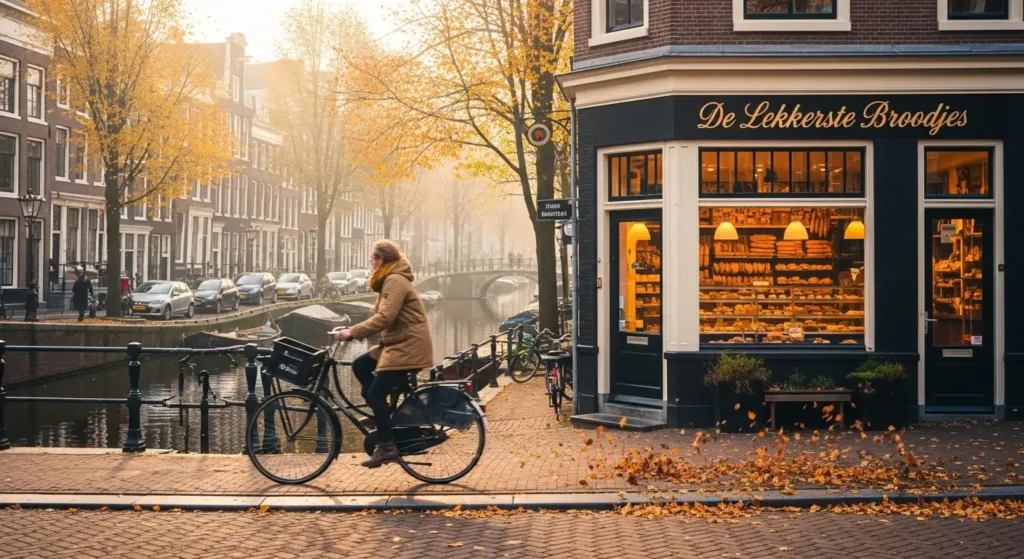
Picture this: you’re cycling along a canal in Amsterdam, the crisp air nipping at your cheeks 🚲❄️. You’ve just spent hours marveling at Van Gogh and Rembrandt, and now a deep, primal hunger sets in. But what do you eat? Sure, you know about Gouda cheese 🧀, but there must be more to Dutch food than that, right?
You’ve come to the right place. Dutch cuisine is often overlooked, hiding in the shadows of its French and Italian neighbors. It doesn’t boast elaborate sauces or complex techniques. Instead, its power lies in something else entirely: heartfelt comfort, practicality, and a history shaped by the sea 🌊. This is food born from a nation of farmers, fishermen, and global traders.
If you’re a beginner to the world of Dutch food, prepare to have your expectations surpassed! We’re going to journey beyond the tourist shops and into the heart of what makes eating in the Netherlands a uniquely satisfying experience. Let’s explore the hearty staples, the irresistible sweets, and the fascinating culture behind every bite 🍽️.
🥘 What Is Dutch Cuisine, Anyway? The Art of Comfort and Practicality
Before we dive into specific dishes, it helps to understand the Dutch mindset towards food. For centuries, the Dutch relationship with eating has been straightforward and sensible. Lunch is often a simple sandwich (boterham 🥪), dinner is early (around 6 PM), and the focus is on nourishment and sharing a meal with family.
This practicality stems from history. The Netherlands is a small country, much of it reclaimed from the sea. Land was for farming and survival. This led to a “husmanskost” tradition, a term similar to “home cooking” that emphasizes simple, affordable, and filling dishes using local, seasonal ingredients 🥔🥕. Think potatoes, vegetables, dairy, and bread. It’s not about a fancy presentation; it’s about warmth and satisfaction. (Want to dive deeper into how agriculture shaped their diet? Check out Food History.nl for a fascinating look into the eating habits of the Dutch!)
🍲 The Main Event| Savory Staples You Absolutely Must Try
This is where Dutch food truly shines. These are the dishes you’ll find in homes and traditional “eetcafes” (pub-like eateries) across the country 🍻.
Stamppot| The King of Comfort Food 👑
If you only try one traditional Dutch dish, make it stamppot. It’s the ultimate winter warmer, a mash-up of potatoes and vegetables, served with a juicy sausage and gravy 🥔🌭. My first experience with stamppot was in a cozy Rotterdam home during a rainy November. The steam rising from the plate was enough to defrost my frozen fingers. It’s the culinary equivalent of a warm hug!
💡 Tip: If you enjoy deeply comforting, potato-heavy dishes like this, you will absolutely love the traditional meals highlighted in our Irish Food Explained | The Simple Guide to Ireland’s Hearty Cuisine 🍀🍲.
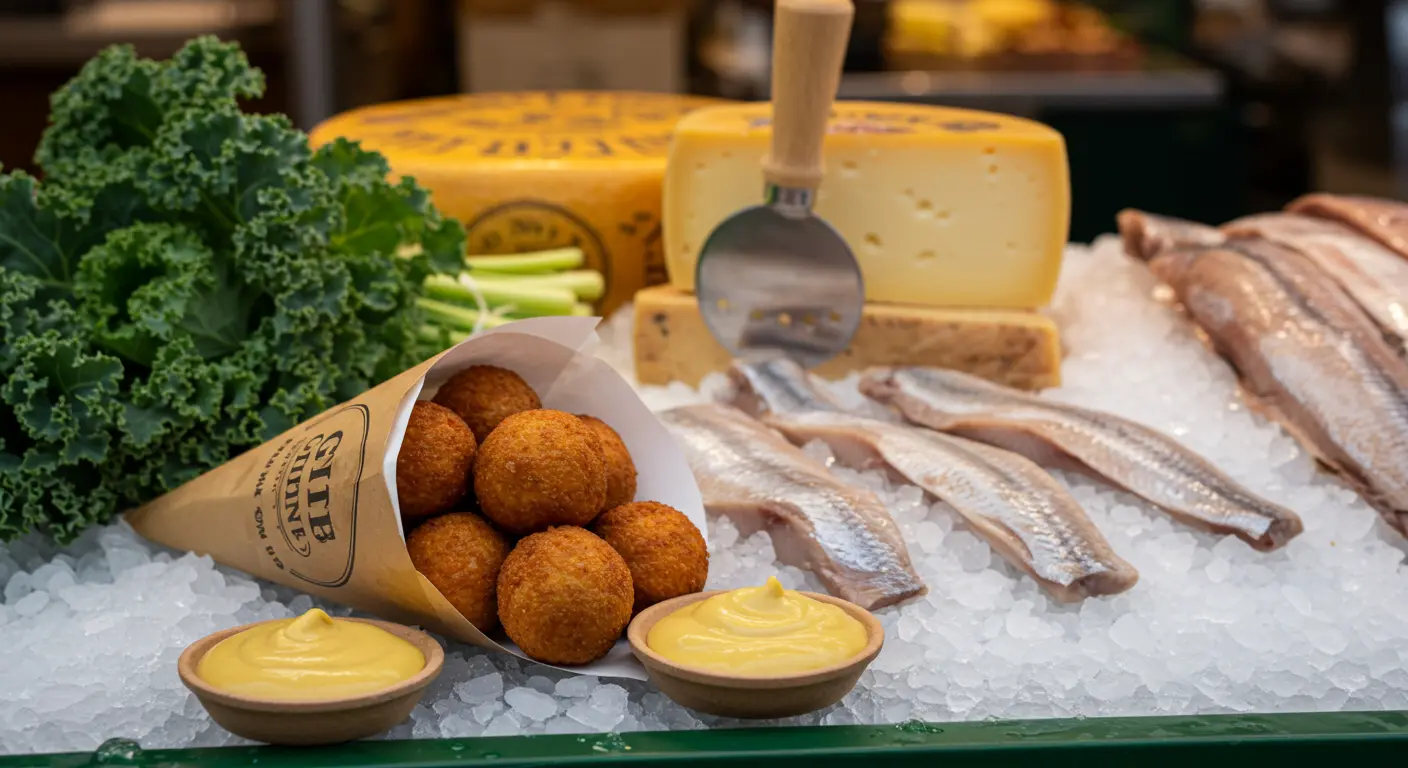
The most classic version is Stamppot Boerenkool, made with kale. The potatoes and kale are boiled together until tender, then mashed with a little milk and butter 🧈. The magic is in the mixing; the goal is a beautifully textured mash, not a smooth puree. It’s always served with a rookworst, a smoked sausage with a distinctive, savory flavor that perfectly complements the earthy greens.

Haring| The Dutch Street Food Dare 🐟
Now for something that might test your bravery: raw herring. Don’t let that scare you off. This is a national obsession for a reason. The herring (Hollandse Nieuwe) is caught between May and July, frozen to kill parasites, and then lightly salted 🧂. The result is a silky, mild fish that bears no resemblance to the strong, salty pickled herring you might know.
The traditional way to eat it is to hold the fish by its tail, tilt your head back, and lower it into your mouth 😲. It’s an event! For beginners, I recommend getting it the easy way: chopped into pieces with pickles and onions, served in a small paper tray with a toothpick. Grab one from a fish stall (haringkar), and you’re participating in a ritual that’s been a part of Dutch culture for centuries.
Bitterballen| The Perfect Pub Snack 🍻
Imagine the creamiest, most flavorful beef stew you’ve ever had. Now, imagine it’s been chilled, rolled into little balls, breaded, and deep-fried until golden brown 🔥. That’s a bitterbal (plural: bitterballen). These are the quintessential snacks to have with a cold Dutch beer, like a Jupiler or Heineken 🍺.
The key is the technique: You must let them cool for a minute after they come out of the fryer. Then, pierce the crispy shell with a toothpick, dip it in tangy mustard, and take a bite. The inside is molten, savory, and incredibly satisfying.
Pannenkoeken| Not Just for Breakfast 🥞
Forget the thin, breakfast-style crepes or the thick, cakey American pancakes. The Dutch pannenkoek is in a league of its own. It’s plate-sized, thin but flexible, and can be either sweet or savory. Going to a “pannenkoekenhuis” (pancake house) is a classic family outing 👨👩👧👦.
Savory versions are a complete meal, often topped with cheese, ham, bacon, and vegetables 🥓🍅. Sweet versions might feature apples, cinnamon, powdered sugar (poedersuiker), or the famous Dutch stroop.
| Dish | Flavor Profile | Best Time to Eat |
|---|---|---|
| Stamppot | Savory, Earthy, Hearty | Dinner (Especially in Winter) |
| Haring | Salty, Fresh, Briny | Afternoon Street Snack |
| Bitterballen | Savory, Crispy, Molten | Evening at the Pub |
| Pannenkoeken | Sweet or Savory | Lunch or Dinner |
🧇 The Sweet Side of Life| Dutch Treats to Satisfy Your Sweet Tooth
The Dutch have a serious sweet tooth, and their treats are world-class 🤤. Just as we explored diverse global sweets in our post, Canada’s Food: A Beginner’s Guide to the Tasty Secrets You Need to Try, the Netherlands offers its own unique spin on sugary delights.
Stroopwafels| The Syrup-Waffle Wonder ☕
You’ve probably seen these in airports, but a fresh stroopwafel is a religious experience ✨. Two thin, warm waffle cookies are sandwiched together with a gooey, caramel-like syrup. The best way to enjoy one is to place it on top of your hot cup of coffee or tea for a minute ☕. The steam softens the waffle and warms the syrup, making it utterly irresistible.

Poffertjes| Miniature Fluffy Clouds ☁️
These are tiny, fluffy pancakes, about the size of a large coin. They’re made with a yeast-based batter, which gives them an airy, slightly spongy texture. Poffertjes are a treat for special occasions, like Christmas markets 🎄 or fairs, but you can find them year-round at specialized stands. They’re served with a generous dusting of powdered sugar and a pat of melting butter.
Tompouce| The King’s Day Delight 👑
This is the Netherlands’ answer to Napoleon or mille-feuille. A tompouce consists of two layers of puff pastry filled with a firm, yellow pastry cream and topped with a smooth, pink or orange icing 🍰. It’s notoriously difficult to eat; most Dutch people have a technique for tackling it without the cream squirting out the sides!
🕒 A Peek into Dutch Food Culture| When and How They Eat
Understanding the daily rhythm of eating is key to appreciating the cuisine. Here is a quick breakdown of a typical Dutch eating schedule:
| Meal | Local Name | Typical Foods |
|---|---|---|
| Breakfast | Ontbijt | Bread with cheese, ham, or chocolate sprinkles (hagelslag); yogurt with muesli. |
| Lunch | Lunch | Broodje (sandwiches), or a quick broodje kroket (ragout-filled fried roll). |
| Dinner | Diner | Potatoes, meat/fish, and vegetables. Often served early, around 6:00 PM. |
For an authentic look into daily life and food culture in the Netherlands, the official Netherlands Board of Tourism & Conventions website is a fantastic resource for planning your culinary adventures 🗺️.
❓ FAQs|Your Dutch Food Questions, Answered
Q: Is Dutch food very spicy? 🌶️
A: Generally, no. Traditional Dutch cooking relies on savory, mild, and sometimes sweet flavors (like the use of nutmeg in mashed potatoes). Spiciness is not a hallmark of the cuisine!
Q: What is a typical Dutch drink to have with food? 🥛
A: Beer is incredibly popular 🍺. Jenever, a juniper-flavored spirit, is the traditional Dutch gin and a classic aperitif. With meals, water, milk, or soft drinks are common.
Q: I’m a vegetarian. Will I find options in the Netherlands? 🥗
A: Absolutely! The Netherlands is one of the most vegetarian-friendly countries in the world. Cities are filled with restaurants offering excellent vegetarian and vegan cuisine.
Q: What’s the deal with Dutch cheese? 🧀
A: It’s a point of national pride! Gouda and Edam are the most famous exports, but there are many more varieties. Visit a cheese shop or market to sample aged (oude), herb-filled, or cumin-spiced cheeses.
Q: Is it true that the Dutch eat licorice (drop) all the time? 🍬
A: Yes! The Dutch are the world’s largest consumers of licorice. But be warned: it comes in many forms, from sweet to extremely salty (zoute drop). Trying salty licorice is a rite of passage for visitors; it’s an acquired taste!
🎒 Ready to Explore?
Dutch food may be simple, but it’s deeply rooted in history, culture, and a sense of comfort. It’s the food of a practical, resilient people who have mastered the art of turning humble ingredients into something truly special 🌷. So, the next time you find yourself in the Netherlands, or even at a Dutch-themed restaurant, be bold! Skip the familiar and order the stamppot, try the herring, and save room for a warm stroopwafel.
Your taste buds will thank you. Eet smakelijk! (Enjoy your meal!) 🎉

By Yaz Explore | YazExplore