Table of Contents
A Flavorful Journey| Your Beginner’s Guide to Morocco’s Food ✈️🌍
Picture this: you’re sitting on a cushion in a courtyard filled with the scent of orange blossoms 🌸. A beautifully decorated, cone-shaped lid is placed before you. When it’s lifted, a plume of aromatic steam reveals tender meat, sweet apricots, and almonds, all simmered to perfection 🤤. This isn’t just a meal; it’s an experience. This is the magic of Morocco’s food.
If your knowledge of Moroccan cuisine starts and ends with “tagine,” you’re in for a treat 🍽️. The food here is a vibrant tapestry woven from centuries of Berber, Arab, Andalusian, and Mediterranean influences. It’s a cuisine that tells a story in every bite a story of bustling spice markets, of communal meals, and of heartfelt hospitality. Feeling a little overwhelmed about where to start? Don’t worry. This guide is your friendly introduction, designed to give you the confidence to explore the incredible world of Moroccan cooking and dining. By the way, if you are planning a trip to experience this firsthand, make sure to read my guide on Morocco Vacation Planning Made Easy: A Proven Guide for Beginners. 🧳
More Than a Stew| Understanding the Soul of Moroccan Cuisine 🌶️🍅
Before we dive into specific dishes, it helps to understand the philosophy behind the food. Moroccan cooking isn’t about throwing a few ingredients together. It’s a slow, deliberate art form built on a few key pillars 🧑🍳.
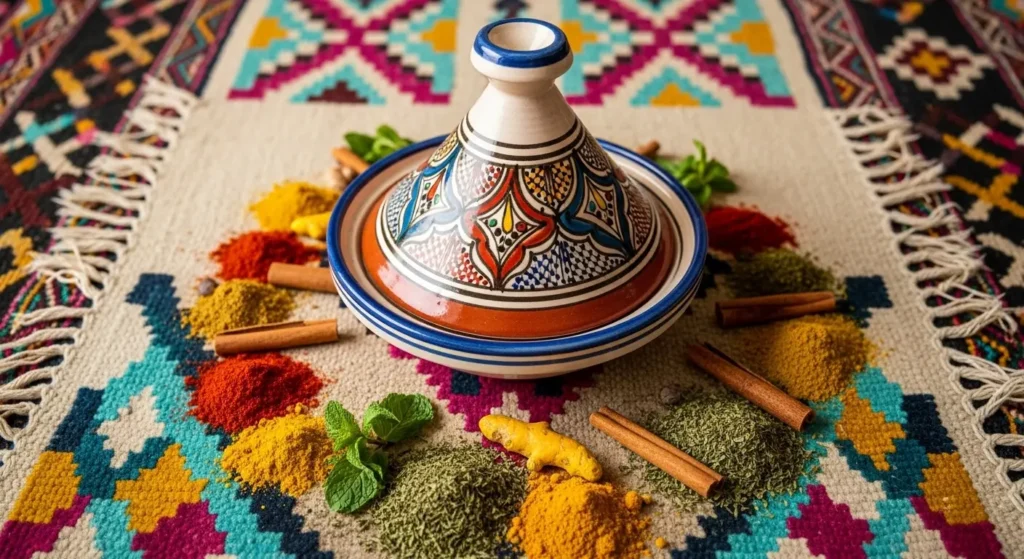
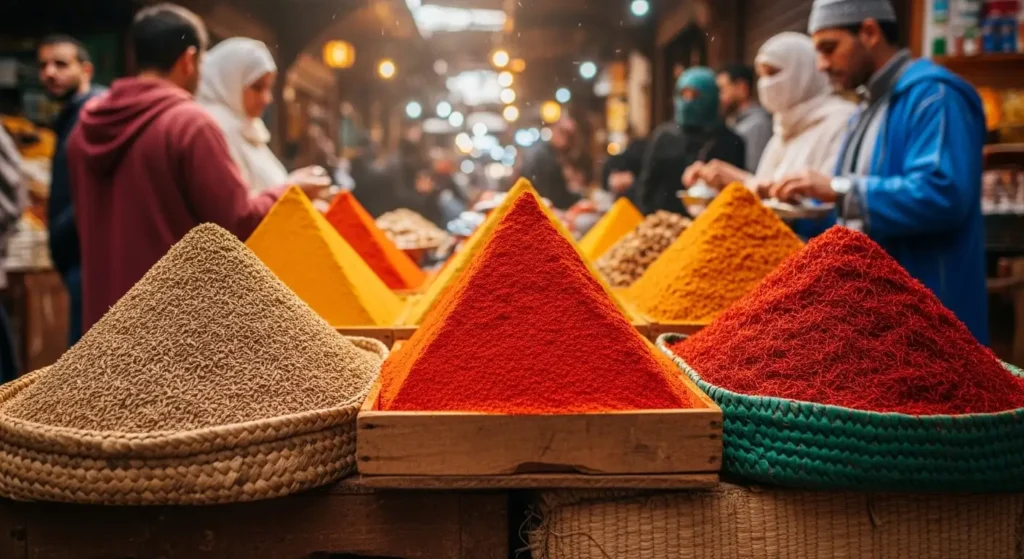
First, there’s the legendary spice palette. Walk through any souk (market) in Marrakech or Fez, and you’ll be mesmerized by pyramids of vibrant spices. The most famous blend is ras el hanout, which translates to “head of the shop.” ( You can read more about its fascinating history on Wikipedia.) It’s a complex, aromatic mix that can contain over thirty different spices like cardamom, clove, cinnamon, and turmeric. Every spice merchant has their own secret family recipe 🤫. Then there’s the warmth of cumin, the heat of ginger, and the distinct golden hue from saffron, the world’s most precious spice ✨.
🧂 Essential Moroccan Spices at a Glance
| Spice | Flavor Profile | Common Uses in Moroccan Cooking |
|---|---|---|
| Ras el Hanout | Warm, earthy, complex | Meat stews, marinades, and festive dishes |
| Cumin | Smoky, earthy | Salads, grilled meats, and lentil dishes |
| Saffron | Floral, slightly sweet | Couscous, chicken dishes, and light broths |
| Ginger (Ground) | Peppery, warm | Tagines, soups, and sweet-savory recipes |
Second, fresh, seasonal produce is important 🍋. Moroccans have a deep connection to their land. You’ll find sun-ripened tomatoes, plump olives, citrus fruits, and a wonderful array of vegetables forming the base of many dishes.
And finally, there’s the central role of bread. Known as khobz, this round, crusty bread is on every table 🥖. It’s more than just a side; it’s your utensil. You’ll use a piece of bread to scoop up tagines, sauces, and salads. It’s a fundamental part of the communal eating experience.
The Main Attractions| Must-Try Dishes for Your Culinary Bucket List 📝🥘
Okay, let’s get to the good stuff. If you’re building your Moroccan food bucket list, these are the non-negotiable classics!
The Iconic Tagine| A Culinary Masterpiece 🏺
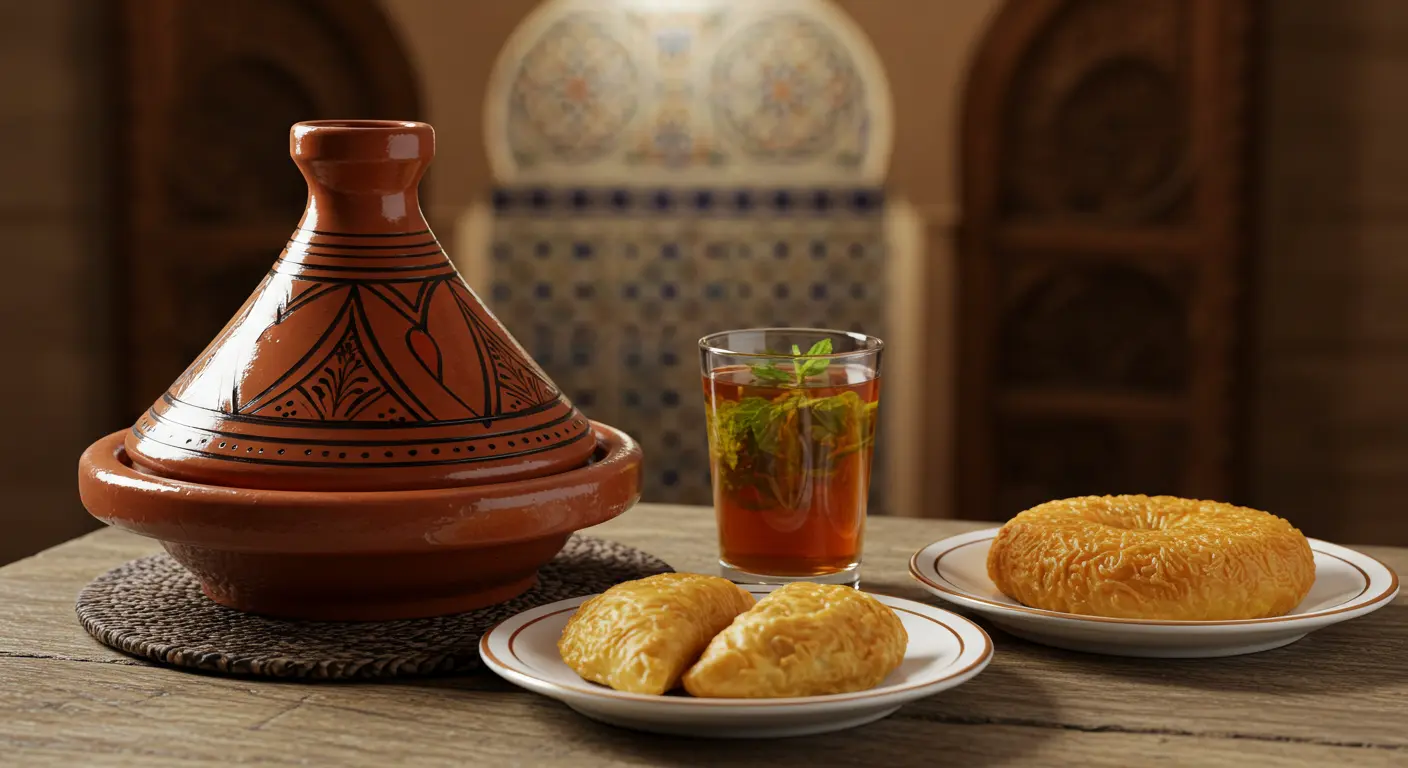
Yes, we have to start here. A tagine refers to both the unique clay or ceramic cookware (with its iconic conical lid) and the slow-cooked stew that’s prepared inside it. The genius of the design is that the lid traps steam, which condenses and trickles back down, resulting in incredibly tender meat and vegetables that are infused with flavor 🍲. It’s a brilliant, ancient method of slow cooking.
You’ll find countless variations, but a few are essential for beginners:
- Tagine with Prunes and Almonds: A beautiful balance of sweet and savory, often made with lamb or chicken 🥩🍑.
- Kefta Tagine: Spiced meatballs simmered in a rich tomato and egg sauce 🍅🍳.
- Fish Tagine: A coastal specialty featuring chermoula-marinated fish with tomatoes and peppers 🐟🍋.
Couscous| The Friday Feast 🥣
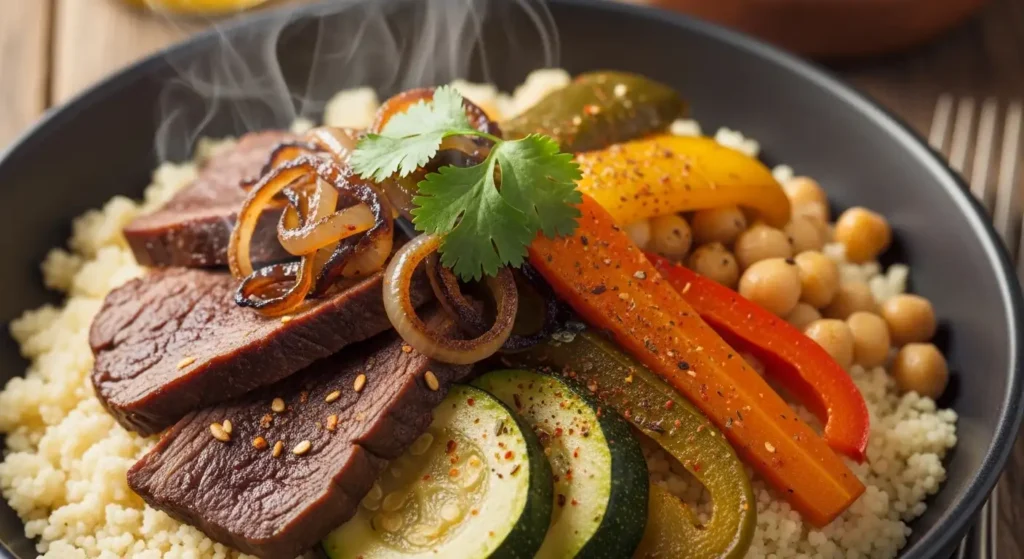
If tagine is the everyday hero, couscous is the star of Friday lunch, a traditional family day in Morocco 🕌. Contrary to popular belief, couscous isn’t a grain; it’s tiny pellets of steamed semolina wheat. Preparing it is a labor of love ❤️. It’s traditionally steamed multiple times in a special pot called a couscoussier until it’s light and fluffy.
It’s typically served with a stew of seven vegetables (like carrots, zucchini, and turnips) and a piece of meat 🥕🥩. Sharing a large communal plate of couscous is a truly special experience.
The Unofficial National Dish| Pastilla (B’stilla) 🥧
Prepare your taste buds for a surprise! Pastilla is a pie that defies expectations. It features layers of thin, flaky warqa pastry (similar to phyllo) filled with shredded pigeon or chicken that’s been slow-cooked with spices and almonds 🍗🌰. Here’s the twist: the pie is dusted with powdered sugar and cinnamon. The combination of savory, spiced meat and a sweet, crispy topping is simply unforgettable 🤩.
Beyond the Classics| Street Food and Hidden Gems 🥙🛵
While tagines and couscous get the spotlight, the real pulse of Morocco’s food scene beats in its street stalls and markets. Much like the rich street foods you might discover in my Portugal Food Beginner’s Guide, Morocco’s quick bites are full of soul and history.
🥟 Popular Moroccan Street Foods
| Street Food | What is it? | How to Eat It |
|---|---|---|
| Msemen | Flaky, square-shaped flatbread | Perfect for breakfast with honey, jam, or soft cheese 🍯 |
| Harcha | Semolina-based pan-fried bread | Sliced open and stuffed with cheese or jam for a quick snack 🧀 |
| Snail Soup (Babbouche) | Snails boiled in a spiced broth | Enjoyed in a bowl; use a pin to pick the snails out of their shells 🐌 |
| Fresh Orange Juice | Pure, freshly squeezed juice | Grab a glass from a vendor at Jemaa el-Fnaa square for instant refreshment 🍊 |
A Cup of Friendship| The Art of Moroccan Mint Tea 🫖🌿
You cannot talk about Moroccan culture without mentioning mint tea. It’s not just a drink; it’s a symbol of hospitality and friendship 🤝. The preparation is a ceremony in itself. Green tea is mixed with a large bunch of fresh spearmint and a generous amount of sugar 🍵. It’s poured from a height into small glasses, which not only cools the tea but also creates a frothy top, a sign of a well-made brew.
As the well-known Moroccan proverb goes, “The first glass is as gentle as life, the second as strong as love, and the third as bitter as death.” You’ll be offered tea everywhere you go, and accepting it is a gesture of respect 🙌.
Eating Like a Local| A Few Tips for Your Adventure 💡🍽️
To truly embrace the experience, keep these simple tips in mind:
- Eat with your right hand. The left hand is traditionally considered unclean. Use your right hand to tear bread and scoop up food ✋.
- Expect sweetness. Moroccan cuisine often blends sweet and savory. Don’t be shocked to find fruit or sugar in your main dishes 🍇.
- Come hungry. Hospitality is generous. It’s polite to try a bit of everything offered to you 🤤.
Frequently Asked Questions (FAQs) ❓
Q: Is Moroccan food very spicy?
A: Not in the way you might think. It’s more about spiced than spicy. The flavors are aromatic and complex from blends like ras el hanout, but intense heat from chilies is less common. Of course, you can always add harissa (a hot chili paste) if you want a kick! 🌶️
Q: What is a good vegetarian option in Morocco?
A: Thankfully, there are plenty! You can find delicious vegetable tagines (with carrots, potatoes, and peas), a fantastic cooked tomato and pepper salad called tak-touka, and zaalouk (a smoky eggplant dip). Lentil soup is also a common and hearty choice 🥗🍆.
Q: What is the best time of year to experience Moroccan food?
A: Any time is good, but spring (March-May) and autumn (September-November) are ideal. The weather is pleasant, and you’ll find markets brimming with seasonal produce like fresh peas, fava beans, and citrus fruits ☀️.
Q: Can I easily find Moroccan ingredients outside of Morocco?
A: It’s getting much easier! Many major supermarkets now carry staples like couscous, cumin, and cinnamon. For more specialized items like ras el hanout or saffron, look for Middle Eastern or North African grocery stores, or order from reputable online spice merchants 🛒🌍.
Your Flavorful Adventure Awaits 🎉
Morocco’s food is a journey for the senses. It’s a cuisine that invites you to slow down, to share, and to savor every flavor 🥰. It’s about the warmth of the mint tea, the communal joy of a couscous feast, and the unexpected delight of a sweet and savory pastilla.
So, the next time you walk past a Moroccan restaurant or see a tagine in a shop, you’ll know there’s a whole world of flavor waiting inside. Why not take the first step on your own flavorful journey? Find a local restaurant, or better yet, try your hand at a simple tagine recipe at home. Your taste buds will thank you! ❤️🇲🇦e. Your taste buds will thank you.

By Yaz Explore | YazExplore