Table of Contents
So, You Think You Know Danish Culture 🇩🇰? Think Again, My Friend. 🤔
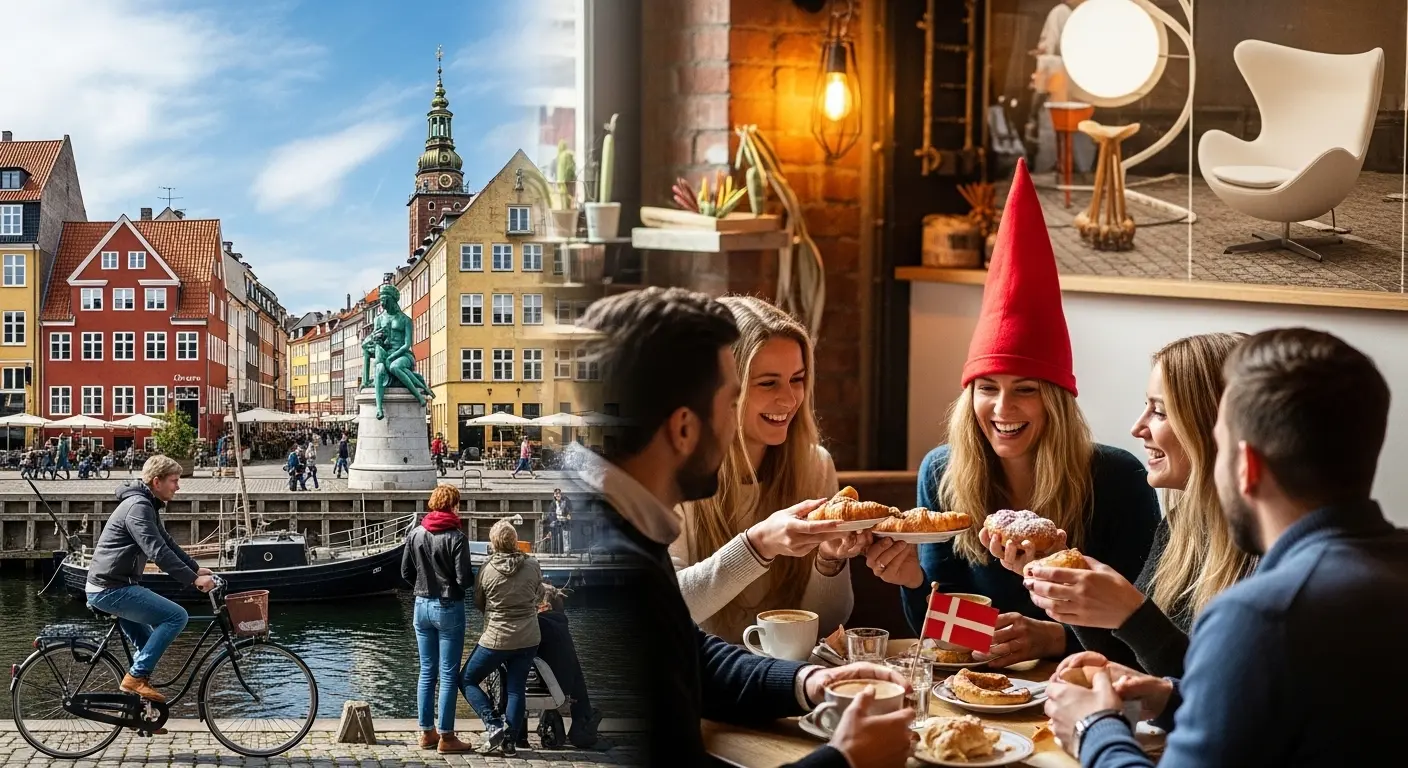
Alright, let’s have a little chat. You’re thinking of heading to Denmark ✈️, or maybe you’re just curious about what makes those Danes so darn happy. You’ve probably heard the word “hygge” thrown around, seen pictures of colorful buildings in Copenhagen 🏘️, and maybe even heard a whisper about their love for bicycles 🚲.
But let me tell you, there’s so much more to it than that.
I remember my first trip to Denmark like it was yesterday. I tried to impress my new Danish friends by using the word “hygge” in every other sentence, thinking I was so clever. 😅 Let’s just say it didn’t quite land the way I thought it would and I got a few chuckles in return. It was a good lesson: understanding a culture goes way beyond the buzzwords.
Today, we’re going to pull back the curtain on Danish culture. We’ll get into the nitty-gritty of what it truly means to live like a Dane, from their social norms to their mouth-watering food 😋. So, grab a cup of coffee (or a Danish beer, I won’t judge! 🍻), and let’s get into it.
The Heart of Danish Culture| It’s All About Community and Trust 🤝
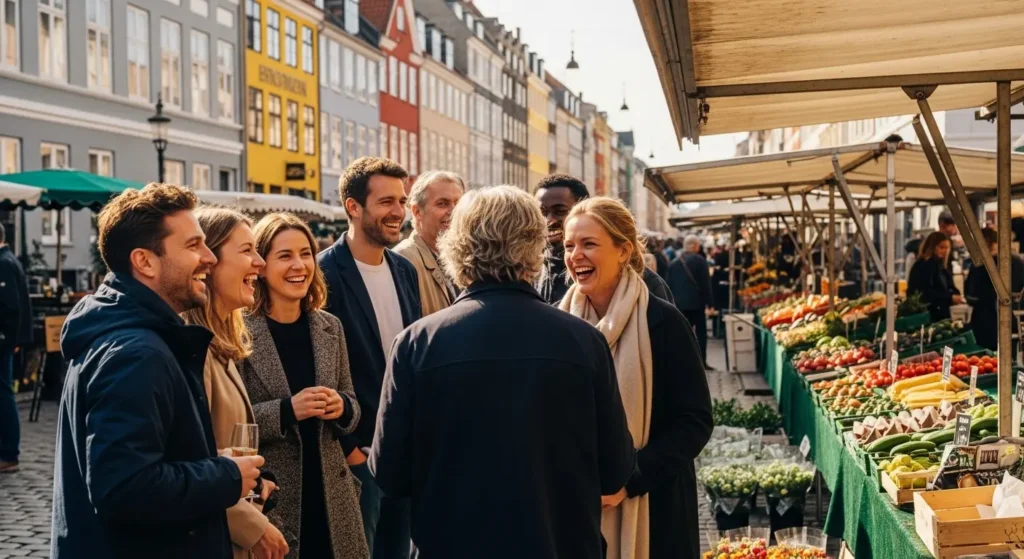
If there’s one thing you need to understand about Danish culture, it’s this: community is everything. Danes have a deep sense of trust in one another and in their society. This isn’t just a warm and fuzzy feeling; it’s a fundamental part of their way of life. It’s what allows them to have a welfare system that provides for everyone, from free education 🎓 and healthcare 🩺 to generous unemployment benefits. Everyone is seen as equal, and there’s a strong belief that everyone deserves a fair shot. 🙌
This sense of equality is so ingrained that they even have a concept for it called the “Law of Jante.” Now, this isn’t an actual law, but a social code that discourages individual superiority and promotes collective success. The ten “rules” of Jante, which originated from a satirical novel, basically say: “You’re not to think you’re anything special.” While it might sound a bit harsh to outsiders, it’s a key part of understanding the Danish mindset. It’s not about putting people down; it’s about celebrating the group over the individual and fostering a sense of humility. 🙏
Hygge| More Than Just a Cozy Blanket 🥰
Okay, let’s talk about the elephant in the room: hygge. You’ve seen it on Instagram, you’ve read about it in lifestyle blogs, but what is it really? Pronounced “hoo-ga,” hygge is often translated as “coziness,” but it’s so much more than that. It’s a feeling of contentment, warmth, and well-being that comes from enjoying the simple things in life. Think of it as a warm hug for your soul. 🤗
Hygge can be found in a flickering candle 🕯️, a shared meal with friends 🍽️, a good book on a rainy day 🌧️, or a walk in the park 🌳. It’s about being present in the moment and appreciating the people and things around you. It’s not something you can buy; it’s something you create. For some great ideas, you can check out this guide on how to ‘hygge’ your home. And while winter is often seen as the peak hygge season, Danes practice it all year round.
Have you ever found yourself completely content, surrounded by good company and a warm atmosphere? That’s hygge. It’s a simple concept, but it’s a powerful one. ✨

Work-Life Balance| The Danish Superpower 🦸♀️
Now, here’s something that might make you a little jealous. The Danes have mastered the art of work-life balance. They work to live, not the other way around. 👏 The standard work week is 37 hours, and working overtime is actually discouraged. Most people leave the office around 4 or 5 PM to pick up their kids, cook dinner, and enjoy their evenings. 👨👩👧👦
And get this: despite working fewer hours, Danes are some of the most productive workers in Europe. How do they do it? 🤯 It comes down to trust, flexibility, and a flat organizational structure. Employees are given a lot of autonomy and are trusted to get their work done. This creates a more relaxed and respectful work environment, where people are happier and more engaged. 😊 You can see more data on this at the OECD Better Life Index for Denmark.
| Work-Life Balance: Denmark vs. OECD Average | |
|---|---|
| Average hours worked per year in Denmark | 1563 |
| OECD average hours worked per year | 1739 |
| Employees working very long hours in Denmark | 2% 😮 |
| OECD average of employees working very long hours | 11% |
| Paid vacation days per year in Denmark | 5 weeks 🏖️ |
Source: OECD Better Life Index

Let’s Talk Food| A Culinary Journey Through Denmark 🇩🇰🍴
You can’t talk about a culture without talking about its food, and Danish cuisine is a treat for the senses. From traditional dishes to modern culinary creations, there’s something for everyone. If you’re planning a trip, you can’t miss The Ultimate Danish Food Tour to find the best spots.
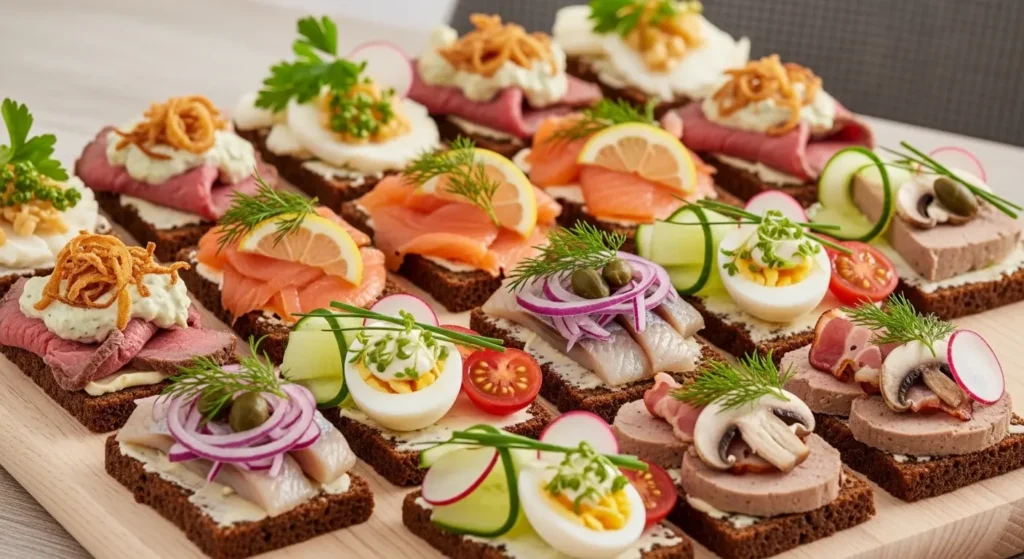
Smørrebrød: The Open-Faced Masterpiece
The quintessential Danish lunch is smørrebrød, an open-faced sandwich built on a slice of dense rye bread called rugbrød. But this is no ordinary sandwich. It’s a work of art, piled high with an endless variety of toppings. Some popular choices include:
- Pickled herring: A classic for a reason. 🐟
- Roast beef with remoulade and crispy onions: A hearty and flavorful option. 🥩
- Shrimp with mayonnaise and a lemon wedge: A light and refreshing choice. 🍤
Beyond Smørrebrød| More Danish Delights
| Dish | Description |
|---|---|
| Stegt flæsk med persillesovs | The national dish of Denmark: crispy fried pork belly with parsley sauce and potatoes. 🥓 |
| Frikadeller | Danish meatballs, often made with a mix of pork and veal and served with potatoes and gravy. 😋 |
| Wienerbrød | You might know it as a “Danish,” but in Denmark, it’s a flaky, buttery pastry that comes in many shapes and with various fillings. 🥐 |
A Note on a National Pastime: The “Pølsevogn”
No trip to Denmark is complete without a visit to a pølsevogn, or hot dog stand. 🌭 But these aren’t your average hot dogs. The classic Danish hot dog, the rød pølse, is a bright red sausage served in a bun with a variety of toppings, including ketchup, mustard, remoulade, fried onions, and pickled cucumbers. It’s a delicious and affordable meal that’s beloved by Danes of all ages.
Traditions and Holidays| A Year of Celebration 🎉
Danes love their traditions, and their calendar is filled with festive holidays and celebrations.
Christmas (Jul)
Christmas, or Jul, is the biggest holiday of the year in Denmark. 🎄 The celebrations start in November and culminate on Christmas Eve, December 24th, with a traditional family dinner. The meal often consists of roast duck or pork with all the trimmings. After dinner, families dance around the Christmas tree and sing carols before opening presents. 🎁

Fastelavn| The Danish Halloween
In February, children celebrate Fastelavn, a holiday that’s a bit like a mix of Halloween and a piñata party. 🎃 Kids dress up in costumes and go door-to-door for candy 🍬, and they also “hit the cat out of the barrel” (slå katten af tønden), which thankfully now involves a barrel filled with candy instead of a real cat. 🐱
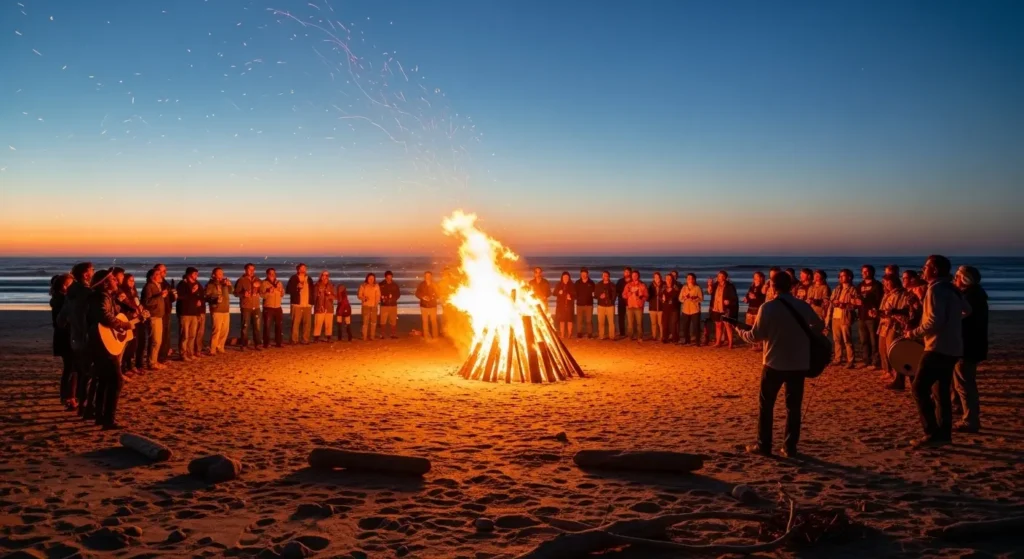
Sankt Hans Aften (Midsummer’s Eve)
On June 23rd, Danes celebrate Sankt Hans Aften, or Midsummer’s Eve. This tradition involves lighting bonfires 🔥, often with a witch effigy on top, singing songs, and celebrating the longest day of the year. ☀️
FAQs About Danish Culture 🤔
Q: Are Danes really as happy as they say?
A: Yes! Denmark consistently ranks as one of the happiest countries in the world. 😄 This is often attributed to their high level of social support, trust, and a healthy work-life balance.
Q: Is it true that everyone in Denmark cycles?
A: While not everyone cycles, it’s an incredibly popular mode of transportation. 🚲 Copenhagen, in particular, is a very bike-friendly city with extensive bike lanes.
Q: Is it hard to make friends with Danes?
A: Danes can sometimes seem reserved at first, but they are generally very friendly and welcoming. Joining a club or a sports team is a great way to meet people. ⚽️🎨
Final Thoughts: Embrace the Danish Way ❤️
So, there you have it. A whirlwind tour of Danish culture. It’s a culture built on trust, community, and a deep appreciation for the simple things in life. It’s about finding joy in the everyday, whether it’s a shared meal with friends or a quiet moment with a good book. My advice to you? Don’t just read about it. Experience it. Go to Denmark, eat a pølse, strike up a conversation with a local, and see if you can find your own little piece of hygge. You might just find that the Danish way of life is exactly what you’ve been looking for. 😉
By Yaz Explore | YazExplore
E-X-P-L-O-R-E without limits at YazExplore