Table of Contents
A Beginner’s Feast Your Friendly Guide to the Delicious World of Danish Foods 🍽️
You have seen the pictures. A flaky, buttery pastry spiraling with a dusting of sugar, perched beside a cup of dark coffee ☕🥐. It is an iconic image, but let me let you in on a little secret: Danish food is so much more than its famous wienerbrød!
Danish cuisine, or det danske køkken, is a beautiful reflection of the country itself, rooted in the seasons, humble on the surface, and bursting with soul-satisfying flavor 🌱. It is about making the most of a short growing season, a long coastline, and a deep love for comfort. Think slow-braised meats, rye bread that is a meal in itself, and preserved fish that tells a story of survival 🐟🥖.
If you are a beginner to this Nordic world of flavor, you are in the right place ✨. We are about to take a tasty tour beyond the pastry case and into the heart of what makes Denmark a truly special food destination. Grab a fork, and maybe a knife, and let us get started 🍴. If you’re planning a trip to experience this firsthand, make sure to check out our complete Denmark Vacation Secrets: The Beginner’s Guide to an Epic Trip. ✈️
The Heart of the Matter Smørrebrød, The Open-Faced Sandwich 🥪❤️
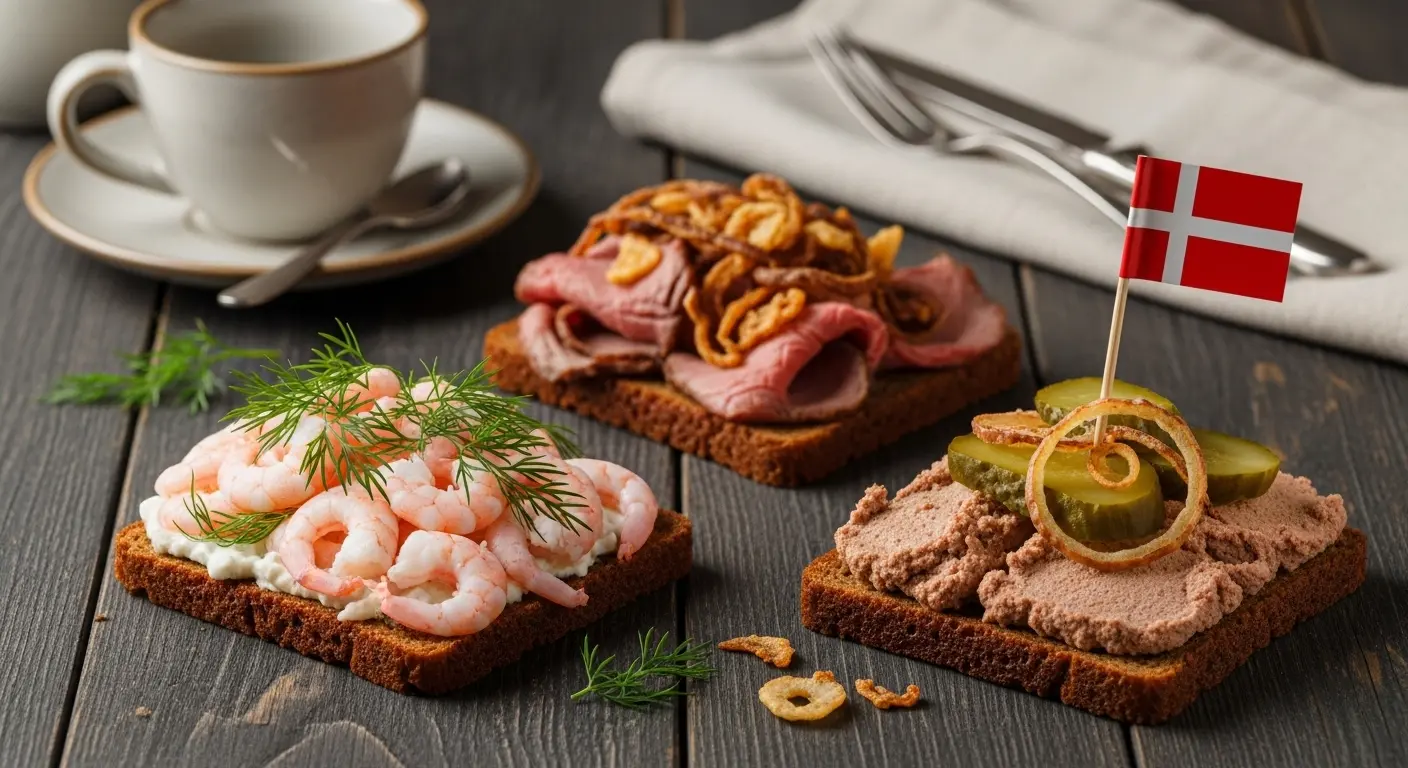
Let us begin with the undisputed king of Danish lunch: smørrebrød, pronounced something like “smuhr bruth” 👑. Calling it a sandwich feels almost disrespectful. This is an art form on a plate, a carefully crafted composition where every ingredient has a purpose 🎨.
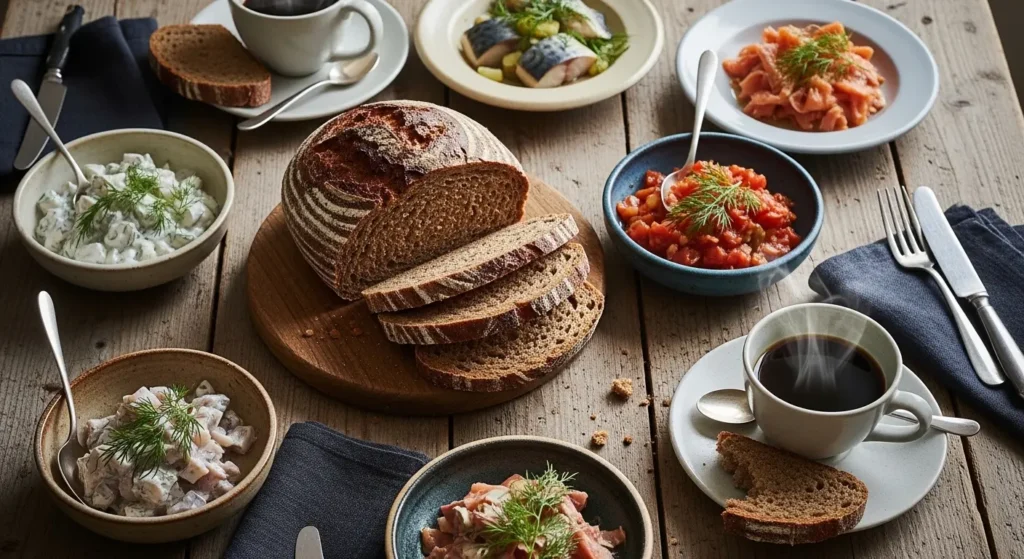
The foundation is non-negotiable: a dense, dark, sourdough rye bread called rugbrød 🍞. This is not the fluffy, sliced bread you might be used to. It is hearty, slightly sour, and packed with whole grains, providing a sturdy base and a tangy contrast to the toppings.
From there, the possibilities are endless, but they follow an unwritten code 📜. You do not just pile things on. It is an ordered layering of flavors and textures. Here is a classic beginner’s trio to look for:
| Smørrebrød Type | Ingredients & Description |
|---|---|
| ⭐ Stjerneskud (“Shooting Star”) | A piece of fried plaice (flatfish) and steamed plaice on buttered rye bread, topped with shrimp, asparagus, lemon, and dill. It is the seafood lover’s dream! 🍤🍋 |
| 🐕 Dyrlægens Natmad (“The Veterinarian’s Night Food”) | A wonderfully rustic combination of liver pâté, corned beef, and a slice of meat aspic, topped with raw onion rings and cress 🧅. |
| 🥔 Kartoffel (Potato) | Simplicity at its finest. Sliced, boiled new potatoes on a bed of mayonnaise, topped with chives and sometimes radishes. A creamy, comforting delight. |
The rule of thumb? Eat it with a knife and fork, and always start with the herring-based ones first if you are having a multi-course smørrebrød feast 🍽️.
The Cozy Classics Danish Comfort Food 🍲🏡
When the weather turns grey and chilly, which it often does in Denmark 🌧️, the Danes turn to their roster of comfort foods. These are the dishes you would find in a Danish home, the ones that evoke feelings of hygge, that untranslatable feeling of cozy contentment 🥰.
Frikadeller, or Danish Meatballs 🧆
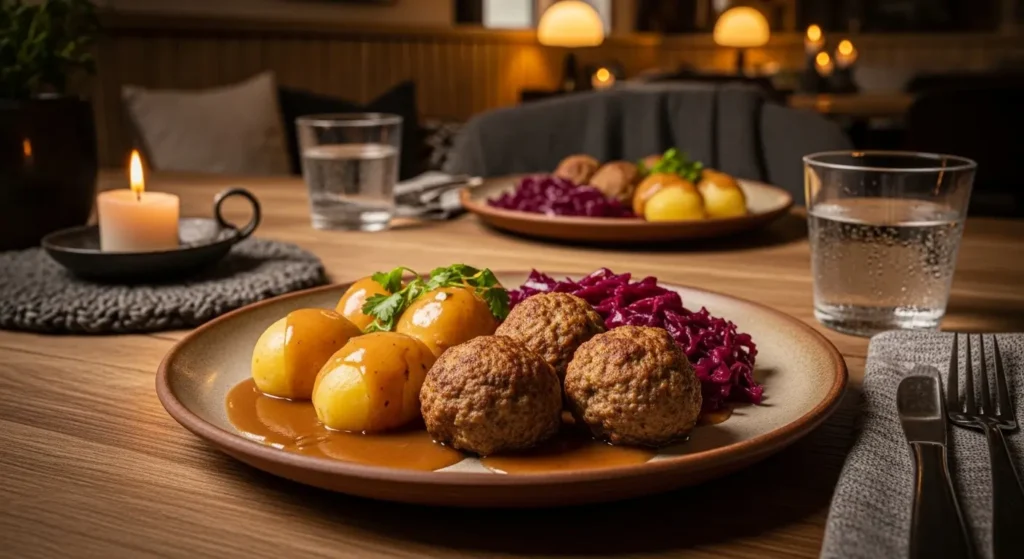
Forget the Swedish version for a moment (though you can read all about those in our Swedish Food Explained guide!). Danish frikadeller are their own unique masterpiece 🎨. They are often a mix of pork and veal, pan-fried until golden brown, and are typically a bit more rustic and irregular in shape. They are juicy, savory, and traditionally served with boiled potatoes, a rich brown gravy, and sweet, stewed red cabbage 🥔🥬. The combination of the salty meatballs, sweet cabbage, and creamy potatoes is a symphony on a plate 🎶.
Flæskesteg, or Roast Pork with Crackling 🥩🔥
This is the centerpiece of the Danish Christmas dinner 🎄, but you will find it year-round, especially at lunch restaurants for smørrebrød. A prime cut of pork is roasted for hours with scores in the rind, resulting in the most incredible, crispy crackling. The secret? Rubbing salt and sometimes bay leaves into the scores 🌿. Served with the same trimmings as frikadeller, it is a celebration of pure, unadulterated pork goodness.
Stegt Flæsk med Persillesovs, or Fried Pork with Parsley Sauce 🥓🌿
In a stunning display of national pride, this dish was officially voted Denmark’s national dish in a 2014 poll 🏆. It is shockingly simple: thick slices of fried pork belly, cooked until super crispy, served with a creamy parsley sauce and boiled potatoes. It is the ultimate test of a good home cook, getting the pork perfectly crisp and the sauce perfectly balanced ⚖️.
The Seafood Staples From the Cold Northern Waters 🌊🦞
With thousands of miles of coastline, it is no surprise that seafood plays a huge role in Danish cuisine 🐟. The most traditional preparations often involve preservation.
Pickled Herring, or Marinerede Sild 🐟🧅
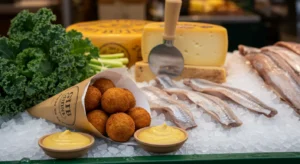
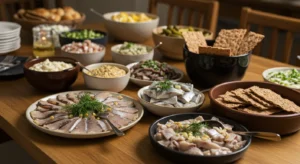
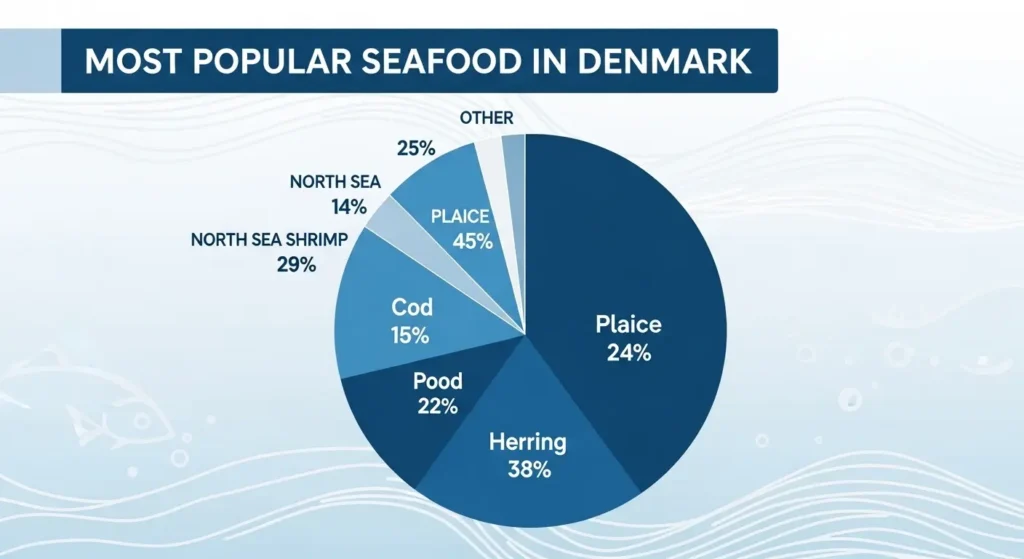
No Danish lunch table, especially at Easter or Christmas 🐣🎄, is complete without a few jars of pickled herring. The small, silvery fish are cured and then marinated in a variety of sauces, like curry, mustard, sherry, or a sweet and spicy blend 🍯🌶️. Eaten on a small piece of rugbrød, they are a powerful, tangy, and delicious punch of flavor. It is an acquired taste for some, but an essential part of the experience!
Shrimps, or Rejer 🦐
The cold, clean waters of the North Sea produce some of the sweetest, most delicate tiny shrimp you will ever taste 🌊. The most common way to enjoy them is piled high on a piece of buttered rye bread, perhaps with a squeeze of lemon and a sprig of dill 🍋🌿. This is the quintessential smørrebrød for a sunny summer day ☀️.
The Sweet Stuff Yes, We Have Pastries! 🥐🧁
Alright, we cannot ignore them completely. Danish pastries are world-famous for a reason 🌍✨.
The Pastry Itself: Wienerbrød 🥨
Fun fact: In Denmark, these pastries are called wienerbrød, or “Viennese bread,” a nod to their origins with Austrian bakers who brought the techniques to Denmark 🇦🇹. The Danes, of course, perfected them 👨🍳👩🍳. The dough is a labor of love, layered with butter and folded repeatedly to create hundreds of flaky layers 🧈.
Beyond the generic spiral, you should know the names of these buttery delights:
| Pastry Name | Description |
|---|---|
| 🍮 Spandauer | The classic round pastry with a rich custard or jam center. |
| 🌀 Kanelstang | A delicious, braided cinnamon roll, often generously topped with pearl sugar. |
| 🌰 Tebirkes | A personal favorite! A flaky pastry filled with sweet marzipan and topped with poppy seeds. The perfect balance of buttery, nutty, and slightly salty. |
The Kagebord, or Cake Table 🍰🥳
Danes have a wonderful tradition of the kagebord, or cake table, for celebrations 🎉. This is where you will find layered cakes, fruit tarts, and especially Drømmekage, or “Dream Cake”, a simple vanilla cake with a crunchy, caramelized coconut topping that is, indeed, dreamy 🥥✨.
A Final Word on the Danish Table 🥂🍽️
Eating in Denmark is as much about the atmosphere as it is about the food 🕯️. It is about taking your time, enjoying the company you are with, and appreciating the simple, high-quality ingredients. It is a cuisine built on tradition, but one that is constantly being reinvented by a new generation of chefs, as seen in the world-renowned restaurant Noma, which has put New Nordic Cuisine on the global map 🌍📍.
You can explore their culinary philosophy and history directly on the Official Visit Denmark Tourism Site to see how these classic flavors are being reinterpreted today.
So, the next time you think of Danish food, I hope you see a vibrant, hearty, and deeply comforting culinary landscape 🥰. It is a cuisine that truly feeds the soul.
Frequently Asked Questions About Danish Foods ❓🤔
| Question | Answer |
|---|---|
| I am visiting Denmark. What is the one food I absolutely must try? | For a truly authentic experience, you cannot leave without trying a properly made smørrebrød 🥪. Head to a traditional lunch restaurant like those found in Copenhagen, order a couple of different ones, and experience the national dish in all its glory. |
| Is Danish food generally healthy? | It can be! 🥗 The heavy reliance on dense rye bread, fish, and root vegetables provides great fiber and nutrients. The modern Danish diet also emphasizes fresh, local produce 🥕. Like any cuisine, the classic comfort dishes can be rich, but balance is key ⚖️. |
| What is a typical Danish breakfast? | It is often a simple and quick affair ☕. Most Danes will have rye bread, or rugbrød, or a whole grain roll with cheese, jam, or a liver pâté, accompanied by coffee or tea. Yogurt with muesli is also very common 🥣. |
| Why is rye bread so important in Denmark? | Historically, rye was a grain that grew much better in the cooler Scandinavian climate than wheat 🌾❄️. It is hearty, filling, and lasts a long time, making it a practical staple. Over centuries, Danes developed a deep cultural and taste preference for its unique, tangy flavor. |
| What is the deal with licorice in Denmark? | Oh, you have heard! 🍬 Danes, and Scandinavians in general, are famous for their love of strong, salty licorice, or salmiak. It is a potent, acquired taste that can be a shock to the uninitiated 😲. Consider trying a mild version first before diving into the extra salty sorts! |
Conclusion 🏁
From the artistic simplicity of a single piece of smørrebrød to the warm, comforting embrace of a plate of frikadeller, Danish food is a journey worth taking 🚶♂️🗺️. It is a cuisine that tells a story of landscape, history, and a people who know how to find joy in a good meal shared with good company 🍻👫. uninitiated. Consider trying a mild version first before diving into the extra salty sorts!

By Yaz Explore | YazExplore