Table of Contents
Let me paint you a picture. 🎨
You’re standing in a grocery store checkout line somewhere in middle America. 🛒 The person ahead of you, a stranger, turns around, smiles, and asks, “So how about that weather we’re having?” ☀️⛈️
If you’re new to the United States, you might be confused. 🤔 Why is this random person talking to you? Do they want something? Are they being weird?
Here’s the thing: they’re not being weird. They’re being American. 🦅

United States culture can feel like a paradox wrapped in a mystery inside an In-N-Out burger. 🍔 We’re simultaneously the friendliest people you’ll ever meet and fiercely protective of our personal space. 🛑 We’ll invite you to Thanksgiving dinner 🦃, but panic if you stand closer than an arm’s length. We’re a nation built on the idea that “all men are created equal,” yet we’re still wrestling with what that actually means in practice. 🤝
Whether you’re planning to move here ✈️, studying abroad 📚, or just curious about what makes Americans tick, this guide will walk you through the real United States culture, not the movie version 🎬, but the messy, beautiful, confusing reality. ✨
🏛️ The Foundation What Americans Actually Believe (Even If We Can’t Agree on Anything Else)
Before we talk about food 🌭, holidays 🎆, or how to survive small talk 🗣️, you need to understand the bedrock. These aren’t just nice ideas written in old documents 📜; they shape how Americans behave every single day.
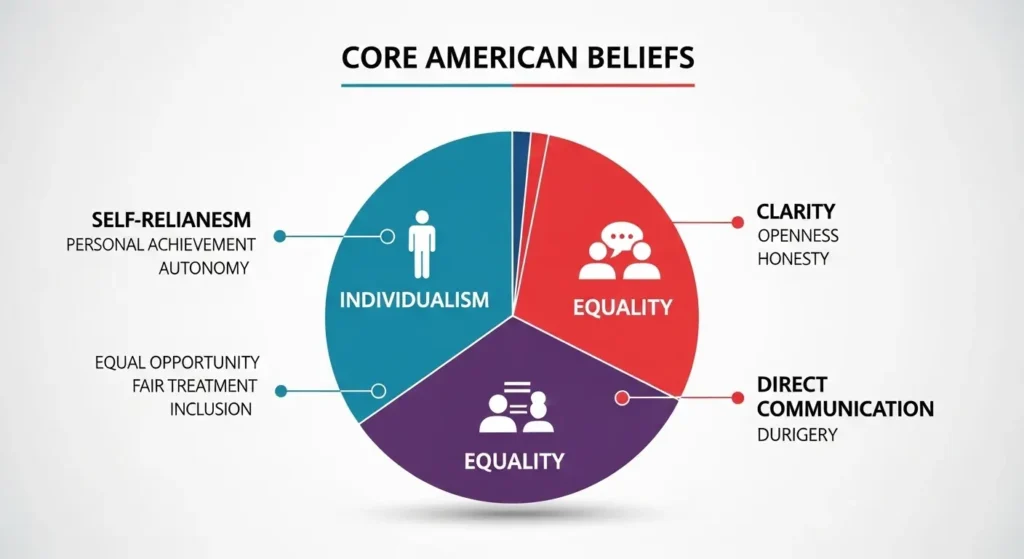
🧗 Individualism The “I Did It My Way” Mentality
Americans are obsessed with the idea of the “self-made” person. 💼 We love stories about people who pulled themselves up by their bootstraps 🥾, started a business in their garage 🛠️, and became millionaires. 💰 Is this always realistic? No. But does it shape how we think? Absolutely. 💯
This means most Americans believe you’re responsible for your own success or failure. 📈 It’s why we’re so comfortable with risk, why we move across the country for better jobs 🚚, and why asking for help can sometimes feel uncomfortable. It can feel like admitting defeat. 🏳️
Real-world example: When an American loses their job, the first question they often ask themselves isn’t “Who’s going to help me?” It’s “What did I do wrong, and how do I fix it?” 🛠️ This is both empowering and, honestly, exhausting. 😴
⚖️ Equality (The Idea, At Least)
Here’s something that confuses visitors: Americans treat each other incredibly informally. 👖 Your boss? First name basis. 🗣️ Your professor? They might insist you call them by their first name, too. 🎓 A judge? Okay, maybe not the judge. 👨⚖️
This informality comes from a deep belief in equality. 🤝 The Declaration of Independence says all men are created equal 📜, and while America has a long, painful history of not living up to that ideal, the ideal itself shapes everything. 🌎
You’ll see this in action when a twenty-year-old intern feels completely comfortable debating politics with a sixty-year-old CEO at a company picnic. 🌭 In many cultures, that would be unthinkable. In America? That’s Tuesday. 📅
🗣️ “How Are You?” Doesn’t Mean What You Think It Means
I need to tell you this because it causes so much confusion. 🤷♀️
When an American says, “Hi, how are you?” 👋 They are not asking for a health update. 🏥 They are not inviting you to share about your recent breakup 💔 or your struggles with insomnia. 🛌
“How are you?” means “hello.” 👋
The correct response is: “Good, how are you?” 👍
That’s it. You say you’re good (even if you’re not), they say they’re good, and everyone moves on with their day. 🚶♂️ This isn’t superficiality, it’s a ritual. 🕯️ It’s a way of acknowledging someone’s existence without getting into the weeds. 🌿
Save the real conversations for close friends. 👯♀️ Americans have deep relationships, but we build them slowly. 🕰️ We use small talk about the weather ☁️, sports 🏈, and traffic 🚗 as a bridge. 🌉
🥗 The American Melting Pot (Or Salad Bowl, Depending on Who You Ask)
You’ve probably heard America called a “melting pot,” 🍲 the idea that everyone comes here and blends into one unified culture.
Here’s the update: these days, many Americans prefer the “salad bowl” metaphor. 🥗 Different groups retain their unique flavors while coexisting in the same bowl. The dressing? That’s the shared American experience. 🇺🇸
🌍 Where Did American Culture Come From?
The foundations are primarily Western and English 🇬🇧, which is why we speak English and why our legal system traces back to English common law. ⚖️ But from the very beginning, it was never just English.
Early influences came from:
- 🪶 Indigenous peoples who were here thousands of years before Europeans showed up.
- 🌍 African cultures brought over through the horror of the slave trade.
- 🚢 German, Italian, Scandinavian, and Irish immigrants who arrived in waves, bringing with them traditions that would eventually shape America’s hearty comfort foods and holiday celebrations.
- ⚜️ French and Spanish settlers in different regions.
- 🌏 Asian and Latin American influences from more recent immigration.
Today, you can see this everywhere. 🏙️ A teenager in Texas 🤠 might eat sushi for lunch 🍣 and tacos for dinner 🌮 while listening to K-pop. 🎶 That’s not cultural confusion, that’s America. 🎆
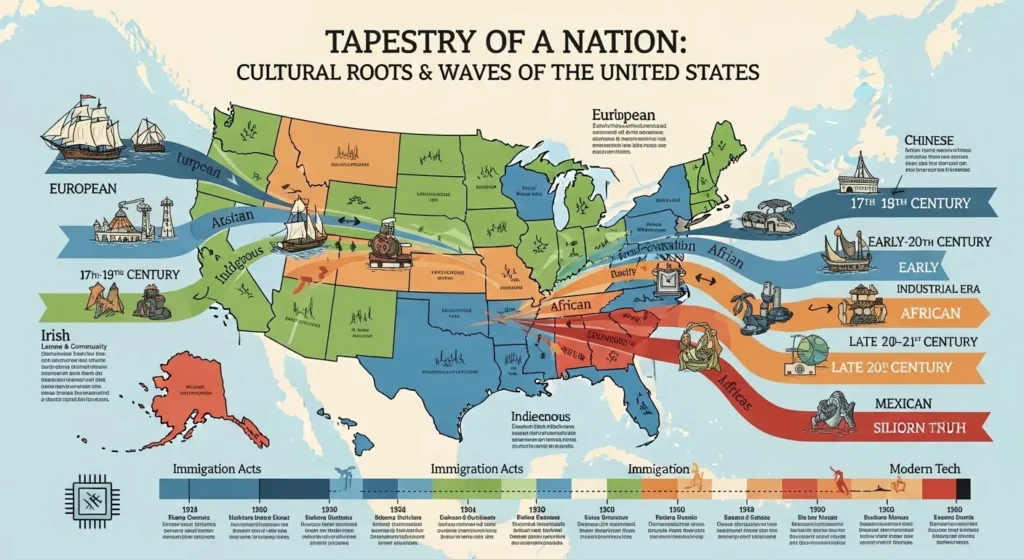
🗺️ Wait, There’s More Than One America?
Here’s something that surprises people: there isn’t one single “American culture.” 🤯 There are regions so distinct they might as well be different countries. 🏞️
Cultural geographer Colin Woodard argues that there are actually eleven rival regional cultures in North America. 🧭 These include:
- 🍁 Yankeedom (New England and the Great Lakes region): Founded by Puritans, focused on education 📚 and community improvement.
- 🍑 The Deep South (from the Carolinas to Texas): Plantation agriculture shaped a hierarchical society. 🏛️
- 🌽 The Midlands (Pennsylvania through the Midwest): A welcoming middle ground, ethnically diverse. 🏘️
- 🌵 El Norte (the Southwest): Spanish influence, border culture, deeply rooted in Mexican history. 🏜️
- 🌲 The Left Coast (the Pacific coast): A blend of Yankee idealism and western expansion, known for innovation. 💡
If you visit Boston 🦞, Atlanta 🍑, and Los Angeles 🌴, you’ll find three different Americas. The food changes. 🍽️ The accents change. 🗣️ The values shift subtly. And yet, and this is the weird part, someone from each of those places will still fiercely identify as American. 🇺🇸
🍔 Food: More Than Just Burgers (But Also, Yes, Burgers)
Let’s talk about what everyone really wants to know: what do Americans eat? 🤤
🍟 The Fast Food Thing
Okay, yes, we have fast food everywhere. 🛣️ Drive through any town, and you’ll see McDonald’s 🍔, Taco Bell 🌮, and Chick-fil-A 🐔. Americans are busy 🏃♂️, we love convenience, and fast food is deeply woven into our culture. 🥤
But here’s what outsiders miss: fast food in America isn’t just about the food. It’s about:
- 🚗 Road trips where stopping at a drive-thru is part of the adventure.
- 💵 High school jobs where millions of Americans get their first paycheck.
- 📚 Late-night college study sessions fueled by cheap pizza. 🍕
- 🧸 Nostalgia for that specific taste of a McDonald’s hamburger from childhood.
🍲 The Real Story Regional and Immigrant Cuisine
If you only eat at chain restaurants in America, you’re missing 90% of the story. 📖
Regional specialties tell you who lives there:
- 🦐 Louisiana gave us Cajun and Creole food, gumbo, jambalaya, crawfish étouffée, and a blend of French, African, and Southern influences.
- 🥩 Texas has its own style of barbecue (beef brisket, slow-smoked, minimal sauce).
- 🌶️ New Mexico offers green chile on everything, a legacy of Hispanic and Native American cultures.
- 🍱 Hawaii serves plate lunch and spam musubi, reflecting Asian and Polynesian influences.
- 🍗 The South gave the world fried chicken, collard greens, and biscuits with gravy.
Immigrant communities keep their food traditions alive, and Americans love it. ❤️ You can find authentic:
- 🍜 Vietnamese pho in Houston.
- 🫓 Ethiopian injera in Washington, D.C.
- 🥟 Polish pierogi in Chicago.
- 🌮 Mexican tacos al pastor in Los Angeles.
- 🥩 Incredible South Korean Food and K-BBQ spots throughout New York City and Los Angeles.
Americans argue about which city has the best pizza 🍕 (New York? Chicago? New Haven?) with the intensity of a religious war. ⚔️ And that’s beautiful. ✨
🎉 Holidays When Americans Come Together
American holidays reveal what we actually care about. 💖 Here are the big ones:
🦃 Thanksgiving (Fourth Thursday in November)
This is the most American holiday. 🇺🇸 Families gather, eat turkey 🍗, watch football 🏈, and if you’re in a traditional family, everyone goes around the table saying what they’re grateful for. 🙏
The historical story involves Pilgrims and Native Americans sharing a meal. 🍂 The real history is… complicated. But the modern meaning is simple: gratitude and family. ❤️
🎆 Fourth of July (Independence Day)
Fireworks 🎇, barbecues 🌭, and wearing red, white, and blue. 🔴⚪🔵 It’s loud, patriotic, and Americans love it. Expect hot dogs, hamburgers, potato salad, and maybe a flag-themed cake. 🎂
🏈 Super Bowl Sunday (February)
Is this a holiday? Kind of. 🤔 Even people who don’t care about football gather to watch the commercials 📺, eat wings and dip 🍗, and complain about the halftime show. 🎤
🕎 The December Dilemma 🎄
December in America means navigating Christmas 🎅, Hanukkah 🕎, and Kwanzaa 🕯️. Public spaces say “Happy Holidays” to include everyone. 🎁 Stores play Christmas music. 🎶 Jewish families light menorahs. It’s a month-long festival of lights, trees, and consumerism. 🛍️
📏 The Unspoken Rules Navigating Daily Life
🛑 Personal Space (Seriously, Back Up)
Americans need about an arm’s length of space between themselves and strangers. 🙅♂️ If you stand closer, we’ll subtly back away. 🚶♀️ We’re not being rude; we’re protecting our “bubble.” 🫧
In crowded elevators 🛗 or subway cars 🚇, everyone collectively agrees to pretend the closeness isn’t happening. Eye contact is avoided. 🙈 We stare at our phones 📱 or the floor numbers.
👀 Eye Contact and Body Language
We make eye contact during conversation, which shows you’re listening 👂, but staring is creepy. 👁️
Handshakes 🤝 are standard for first meetings. Firm, brief, professional. 💼 Hugs 🤗 are for friends. Touching strangers? Avoid it. 🚫
💵 Tipping: Yes, It’s Confusing.
Here’s the deal: in restaurants, tip 15-20% of the pre-tax bill. 🧾 Servers earn below minimum wage because tips are expected. 🍽️
- Bartenders? 🍺 $1-2 per drink.
- Hotel housekeeping? 🛏️ A few dollars per night.
- Delivery drivers? 🍕 15-20% or a few bucks, depending on the order.
Is the system confusing? Yes. 😵💫 Is it changing? Slowly. ⏳ But right now, not tipping means that person effectively worked for free. 💸
🧩 The Complicated Parts What Americans Are Wrestling With Right Now
I’d be lying if I painted American culture as all apple pie 🥧 and friendly hellos. 👋 Right now, the country is going through some things. 🌪️
🥊 The Culture Wars
Americans are fighting about… everything. 🗣️ Bathroom policies. 🚻 School curricula. 🎒 What kinds of stories get told? A denim ad with Sydney Sweeney recently became a national controversy. 👖 A Cracker Barrel logo change sparked presidential attention. 🥞
It sounds absurd, and sometimes it is 🤡, but these fights reflect deeper anxiety. 😟 When you can’t agree on basic facts, everything becomes symbolic. Every purchase 🛍️, every logo 🏷️, every ad 📺 becomes a statement about who you are.
🔴 Political Polarization 🔵
The 2024 election revealed a country deeply divided. ✂️ Republicans and Democrats see the world differently. 🌍 They consume different media. 📰 They have different friend groups. 👯♂️
Here’s a striking statistic: 📉 51% of young women report having no close friends who support Donald Trump. Meanwhile, 47% of young men say some or most of their close friends are Trump supporters. We’re sorting ourselves into political bubbles. 🫧
📉 Declining Social Connection
Americans are spending less time in “third places” coffee shops ☕, parks 🌳, and community spaces 🏘️, not at home or work. This started before COVID but hasn’t recovered. 😷
Single men face a particular challenge: fewer than half report receiving a hug or physical affection in the past week. 💔 That’s… honestly kind of heartbreaking. 🥺
🤝 But Also Americans Still Trust Each Other
Here’s the hopeful part: despite everything, 63% of Americans believe strangers would help someone in need. 🆘 Two-thirds believe people will obey laws. ⚖️ Most think Americans treat each other with respect. 🫡
We’re disconnected and divided, but we haven’t given up on each other. ❤️🩹
❓ Frequently Asked Questions About United States Culture
Q: Is it true that Americans are superficial because they make small talk? 🗣️
A: Not at all. Americans use small talk as a gateway to deeper relationships. 🌉 We’re friendly with everyone, but close friendships take time. ⏳ We’re not being fake; we’re being polite while we figure out if we click. 🧩
Q: Do Americans really not care about personal space? 📏
A: Actually, we care a lot. We just show it differently. 🛑 We need about 18 inches of space from strangers. Close talkers make us uncomfortable. 😬
Q: What topics should I avoid discussing with new American acquaintances? 🤐
A: Politics 🗳️, religion ⛪, money 💰, and sex 🛌 are generally off-limits until you know someone well. Stick to sports ⚾, weather 🌤️, TV shows 📺, or travel ✈️.
Q: Why do Americans smile so much at strangers? 😁
A: Because we were raised to see friendliness as a virtue. 🌟 That smile doesn’t mean we want to be best friends; it means we acknowledge your existence and wish you well. 👋
Q: Is American food really just fast food? 🍔
A: Absolutely not. ❌ America has incredible regional cuisine, world-class restaurants 🍽️, and authentic food from virtually every culture on earth. 🌍 The fast food exists, but it’s just one small slice of what Americans actually eat. 🍰
Q: How religious are Americans really? 🙏
A: It’s complicated. 🤷♂️ The majority identify as Christian ✝️, but the “none” category (no religious affiliation) is growing fast. 📉 Religion is private for many, central for some. You’ll find everything from megachurches ⛪ to secular communities. 🌱
🇺🇸 So, What Is United States Culture Really?
After all this, you might want a simple answer. Sorry, there isn’t one. 🤷♀️
United States culture is a teenager in Queens eating tacos 🌮 while watching anime. 📺 It’s a grandmother in Alabama saying “yes ma’am” and meaning it. 👵 It’s a tech worker in San Francisco 💻 who hasn’t been inside a church in years, and a family in Utah going to the temple every Sunday. ⛪ It’s the Fourth of July parade 🎇, the Diwali celebration 🪔, and the Lunar New Year festival 🐉 happening in the same city on different weekends.
It’s the belief that you can reinvent yourself 🦋 that where you start isn’t where you have to end. 🚀 It’s messy and loud 📢 and sometimes exhausting. 😫 It’s also, somehow, still hopeful. 🌈
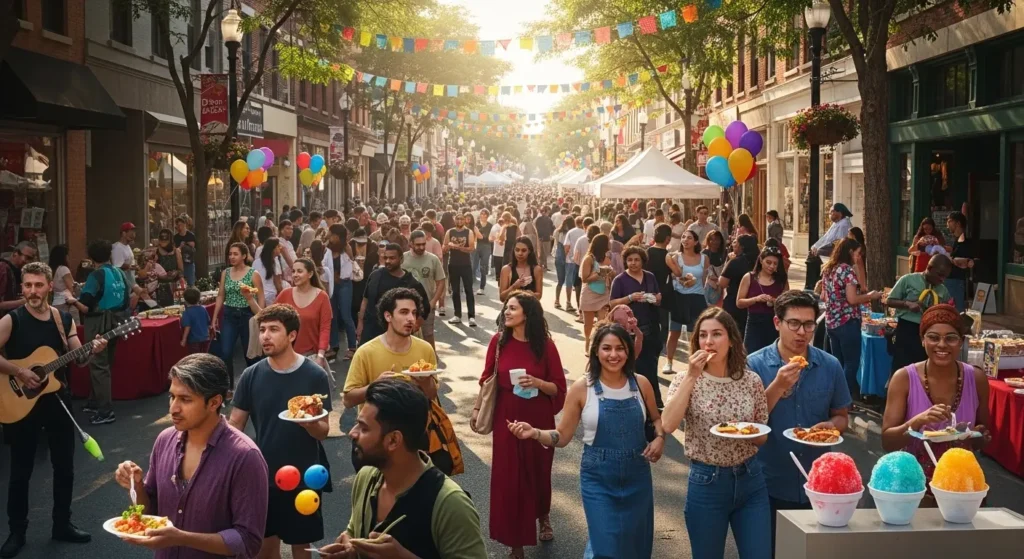
The best way to understand American culture? Come see it. ✈️ Talk to people. 🗣️ Eat the food. 🍔 Make mistakes with the small talk. 🤦♂️ Americans will forgive you, we’ll probably even help you out. 🤝
Because at the end of the day, that stranger in the grocery store line asking about the weather? 🛒⛅ They’re not being weird. They’re just being American. 🦅 And now you know what that means. 🇺🇸
(Want to dive deeper? The Library of Congress’s guide to American culture offers incredible resources on regional traditions and history. 🏛️)Are you asking about the weather? They’re not being weird. They’re just being American. And now you know what that means.
Want to dive deeper? The Library of Congress’s guide to American culture offers incredible resources on regional traditions and history.

United States Culture By Yaz Explore | YazExplore