Table of Contents
A Beginner’s Feast| Unlocking the Hearty, Surprising World of Russian Food 🌍
Let’s be honest. When you think of Russian food, what comes to mind? Maybe a bowl of red soup, a hearty dollop of sour cream, and perhaps a stiff shot of vodka. 🥃 It’s a common starting point, but let me tell you, you’re barely scratching the surface!
Russian cuisine is a hidden giant in the world of culinary traditions. It’s a story of survival, celebration, and soul, shaped by long, harsh winters and a history of cultural exchange along the great Silk Road. This isn’t just food; it’s edible history designed to warm you from the inside out. ❤️🔥
If you’re a curious foodie feeling a little intimidated, you’ve come to the right place. Forget the stereotypes. We’re about to embark on a flavorful journey through the comforting, complex, and utterly delicious world of Russian cooking. By the end of this, you’ll be ready to seek out a local Russian restaurant or, even better, brave making your own pelmeni. 🥟
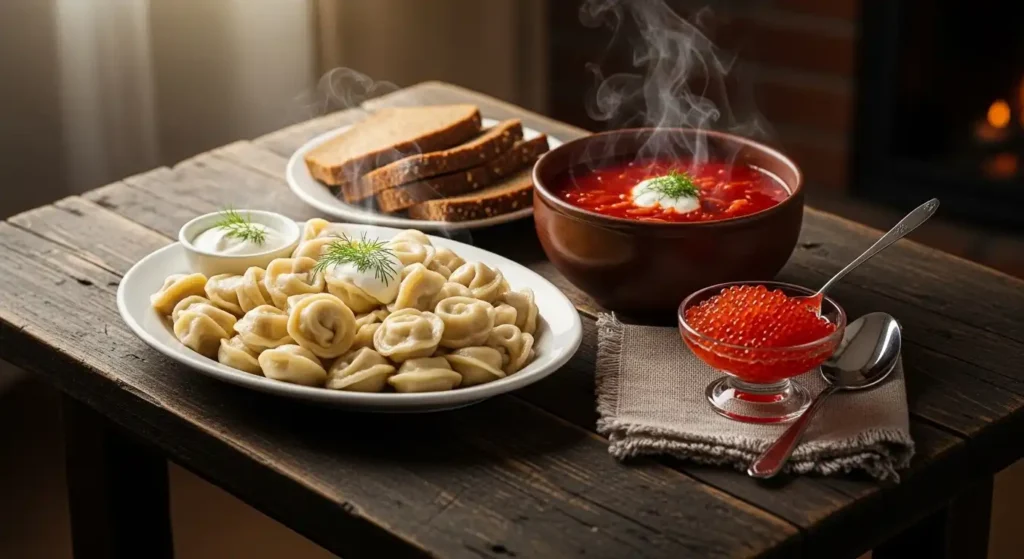
So, What Is Russian Cuisine, Anyway? 🧐
Before we dive into specific dishes, it helps to understand the why behind the food. Russian cooking is, at its core, pragmatic and generous. 🤝
Imagine for a moment a six-month winter. ❄️ Your ancestors needed meals that were calorie-dense, preserved well, and could be cooked in a single pot hanging in the hearth. This is why you’ll find a heavy reliance on root vegetables (beets, potatoes, carrots), hardy grains (rye, buckwheat), and preserved foods like pickles and smoked meats. 🥔🥕
But it’s not all about survival. The Russian table, or stol, is a central symbol of hospitality. Offering a guest a meager meal was considered a deep disgrace. This cultural cornerstone gives rise to the lavish spreads and multi-course feasts, especially during celebrations. 🎉
If you enjoy exploring how geography and winter climates shape hearty national dishes, you might also love seeing the parallels in our Swiss Food Guide for Hearty Dishes! 🧀🇨🇭
The Unforgettable Staples|Your Russian Food Starter Pack 🎒
These are the dishes that form the bedrock of the cuisine. You can’t claim to know Russian food without meeting these icons. 👑
1. The Soups: More Than a Starter 🥣
In Russia, soup (sup) isn’t just an appetizer; it’s often the main event.
| Soup Name | Key Ingredients | Flavor Profile | Best Enjoyed… |
|---|---|---|---|
| Borscht | Beets, cabbage, potatoes, beef | Sweet, earthy, and slightly sour | With a large dollop of sour cream (smetana) |
| Shchi | Fermented cabbage, broth | Tangy, simple, and deeply comforting | On a freezing winter evening |
| Solyanka | Mixed meats, olives, capers, pickles | Salty, sour, robust, and smoky | As the ultimate hangover cure |
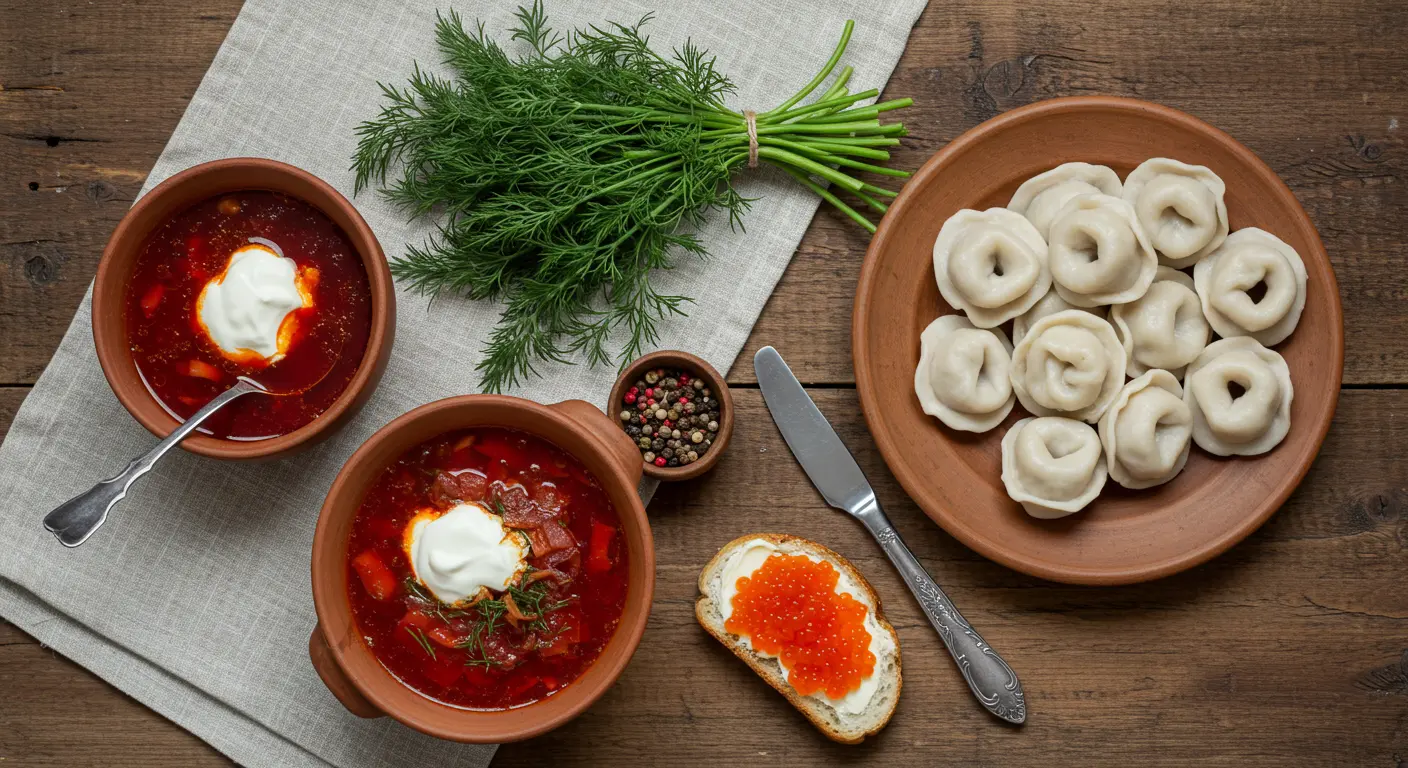
- Borscht: Okay, we have to start here, but let’s give it its due respect. This vibrant, ruby-red beet soup is the undisputed king. Did you know that UNESCO officially recognized borscht cooking culture as an intangible cultural heritage? While it has Ukrainian origins, it has countless regional variations across Eastern Europe. Some are clear and brothy, others are thick and hearty. The mandatory garnish? A giant spoonful of cool sour cream (smetana) and a sprinkle of fresh dill. 🌿
- Shchi: If borscht is the king, shchi is the ancient queen. 👑 This is a cabbage soup, often made with a sour tang by using fermented cabbage.
- Solyanka: Feeling adventurous? Meet solyanka, the “hunter’s soup.” This thick, piquant soup is bursting with a mix of different meats, sausages, and briny ingredients. 🍋
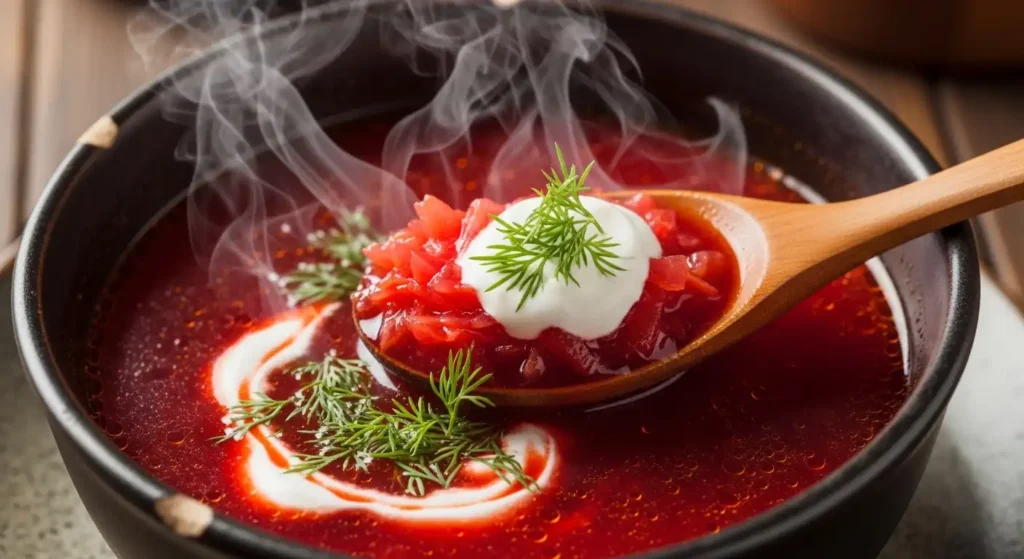
2. The Dumplings: Pocketfuls of Comfort 🥟
Every culture has its dumpling, and Russia is no exception. Just as you might explore the bold flavors of Asia in our First Dive into South Korean Food 🥢, Russia brings its own satisfying stuffed doughs to the world stage!
| Dumpling Type | Origin / Style | Typical Fillings | How It’s Served |
|---|---|---|---|
| Pelmeni | Russian / Thin dough, small | Minced meat (pork, beef, lamb) & onions | Boiled, tossed in butter, or in broth |
| Vareniki | Ukrainian / Thicker dough, larger | Mashed potatoes, farmer’s cheese, cherries | Boiled, topped with sour cream or sugar |
3. The Salads: A Festive Affair 🥗
Russian salads are a different beast from the light, leafy greens you might be used to. They are dense, layered, and meant for special occasions. 🎊
- Salat Olivye: The centerpiece of every New Year’s table. Diced boiled potatoes, carrots, eggs, pickles, peas, and bologna or chicken are bound together in a creamy mayonnaise blanket. 🥔🍗
- Seledka Pod Shuboy: Translated as “Herring under a Fur Coat,” this salad is a sight to behold. Layers of salted herring, diced onions, boiled potatoes, carrots, and beets are smothered in mayonnaise, giving it a stunning purple hue! 🐟💜
The Supporting Cast: Bread, Pancakes, and Spreads 🍞
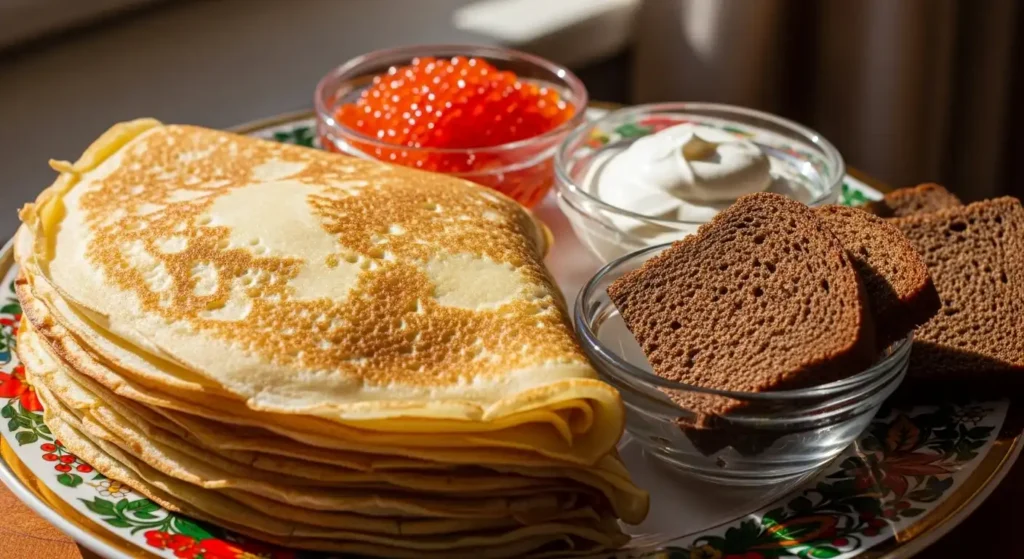
- Khleb (Bread): In Russia, bread is sacred. While white bread is common, the true star is Borodinsky Bread, a dark, slightly sweet rye bread flavored with coriander. 🥖
- Ikra (Caviar): Yes, it’s a real thing, not just a movie trope! Red salmon caviar (ikra) is highly accessible. Spread cold butter on white bread, top with red caviar, and enjoy the briny flavor! 🧈
- Blini: These are not just pancakes; they are a cultural phenomenon. Thin, crepe-like, and yeast-leavened, blini are incredibly versatile, served with sweet jams or savory minced meat. 🍯🥞
Bringing Russian Food to Your Kitchen| A Beginner’s Project 🧑🍳
Feeling inspired? The best way to understand a cuisine is to cook it. I’d suggest starting with Pelmeni. 🥟 It’s a fun, hands-on process, especially if you have a helper.
You’ll need a simple dough (flour, water, egg, salt) and a filling of equal parts ground pork and beef with finely minced onion. Roll the dough thin, cut out circles, place a small ball of filling in the center, and fold them into little moons. 🌙 Boil them in salted water for 5-7 minutes. Serve with a mountain of sour cream, a sprinkle of dill, and a dash of vinegar! 🍽️
Frequently Asked Questions (FAQs) ❓
Q: Is Russian food always so heavy and starchy?
A: Traditionally, yes, it leans heavily toward providing energy. However, modern Russian cuisine is evolving. Furthermore, the summer brings an abundance of fresh berries, mushrooms, and vegetables straight from the dacha (country house) gardens. 🍓🌲
Q: I’m a vegetarian. Is there anything for me to eat?
A: Absolutely! 🥦 You have vareniki with potato or cheese, gribnoy sup (mushroom soup), all kinds of pickled vegetables, and buckwheat (grechka) as a fantastic side dish.
Q: What’s the deal with vodka? Do I have to drink it with the meal?
A: Vodka is culturally significant for celebrations, but no, you don’t have to drink it! Kvass, a fermented low-alcohol beverage made from rye bread, is wonderfully refreshing. Kompot, a sweet fruit drink, is also a family staple. 🍒🥤
Q: What’s one Russian dish I should absolutely try first at a restaurant?
A: Start with a trio: Borscht to understand the soul, Pelmeni for comfort, and Beef Stroganoff for a taste of the imperial, refined side of the cuisine. 🍲🥩
The Final Ladle 🥄
Russian food may not be the trendiest cuisine on the block, but its staying power is a testament to its profound ability to comfort and nourish. It’s the warmth of the soup pot against the winter chill, the joy of a shared dumpling, and the vibrant color of a beetroot field in a summer sunset. 🌅
So, take a chance. Explore your local Eastern European market. Find a recipe that calls to you. You might just discover that the soulful, hearty world of Russian cooking feels a lot like home. 🏡✨ Considered a seminal text, you can find excerpts and articles on The Moscow Times food section, which often features authentic culinary insights.
By Yaz Explore | YazExplore